Loading...
Serving Springfield, OH and surrounding areas. (937) 629-8031
A cracked, flaking, or uneven concrete floor is more than an eyesore - it is a floor that is failing. We install concrete floors in Springfield built with the right base prep, reinforcement, and joint placement to hold up through Ohio winters for decades.
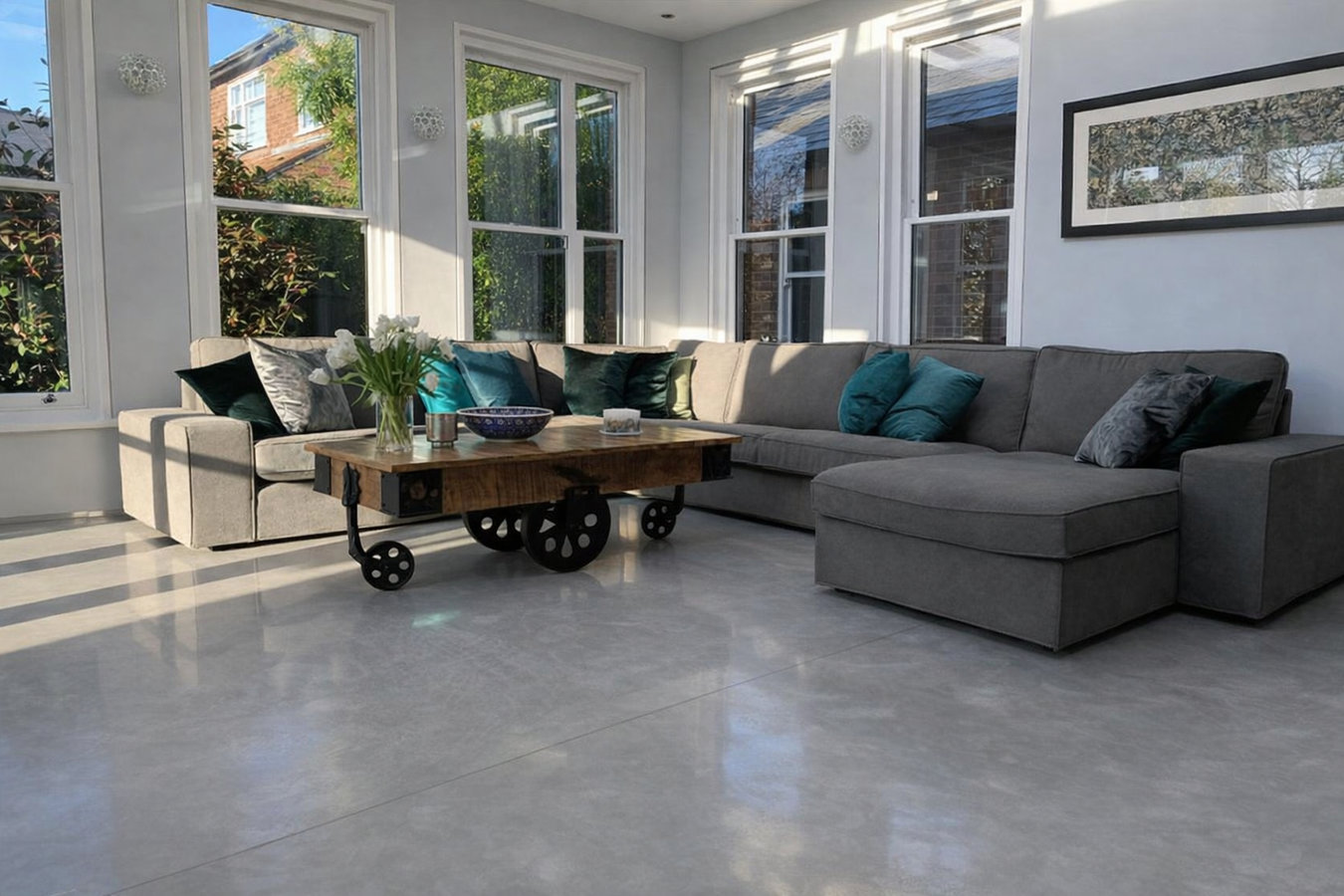
Concrete floor installation in Springfield covers removing old concrete or grading bare ground, compacting the subbase, pouring a reinforced slab, and finishing the surface - most residential garage or basement floors are poured in a single day, with the full project from first call to final inspection typically taking one to two weeks. Springfield Concrete Company handles every step including permits.
Springfield's housing stock skews older - a large share of homes were built before 1970 - and many of those garages and basements have slabs that were poured thin, never sealed, and have been absorbing Ohio road salt and freeze-thaw damage for decades. At some point a patch does not hold, and a new pour is the more honest answer. If you are dealing with a damp basement floor on top of all that, a new slab with a proper vapor barrier underneath it can change how the whole space feels.
If you are also thinking about the garage floor specifically - the surface finish, sealing options, and what it takes to park vehicles on it - our garage floor concrete service goes deeper on that topic for homeowners focused specifically on the garage space.
Small hairline cracks in a concrete floor are common and often harmless. But if you notice cracks wider than a quarter inch, or cracks that seem to be growing season to season, the slab is moving or settling underneath. In Springfield, where Clark County's clay-heavy soils shift with moisture changes through the year, this kind of movement is a common reason older slabs eventually need to be replaced rather than patched.
If the top layer of your concrete is peeling away in chips or developing a rough, pitted texture, the surface has been compromised. This is especially common in Springfield garages, where road salt tracked in from Ohio winters eats into unsealed concrete over time. Once the surface starts breaking down like this, it tends to get worse quickly - patching rarely holds for long.
A white chalky deposit on your concrete floor - called efflorescence - is a sign that moisture is moving up through the slab from the ground below. Springfield's older homes often have basement slabs with no moisture barrier underneath them. If your floor feels damp, smells musty, or shows this residue, a new slab with a proper vapor barrier could solve the problem.
If you can feel a slope or a hump when you walk across your garage or basement floor, the slab has shifted. This can happen gradually over years as the soil beneath it settles or erodes. An uneven floor affects drainage, makes the space harder to use, and in a garage can cause water to pool toward the walls instead of draining away from the structure.
We install concrete floors for garages, basements, utility spaces, and new construction across Springfield and the surrounding area. Every job starts with what is underneath the slab - grading, compacting the base material, and in basement applications, laying a polyethylene vapor barrier to block moisture from wicking up through the finished floor. Most residential slabs are poured at four inches thick for standard loads, and we recommend five to six inches for garage floors that will see heavy vehicles or equipment. Reinforcement - either steel rebar or welded wire mesh - is embedded in every slab we pour to hold the concrete together if cracking does occur. For homeowners who want to go further with the finished look, our concrete pool decks work shows what is possible with surface finishes when you want more than plain gray.
The surface finish is applied in the final minutes before the concrete sets - smooth trowel finishes for basements and interior spaces, broom texture for garages and outdoor-adjacent areas where grip matters. Control joints are cut into every slab at proper intervals so temperature-driven cracking has a planned path instead of running across the middle of your floor. We apply a concrete sealer on request, which is especially worthwhile for garage floors in Springfield where road salt and freeze-thaw cycles will otherwise shorten the surface life. The Portland Cement Association and the American Concrete Institute both publish guidance on residential slab construction that we work to on every job.
For homeowners with a cracked, flaking, or failing garage slab that patching can no longer fix.
For homes with bare dirt or deteriorating basement slabs - includes vapor barrier and proper finishing for a usable space.
For additions, conversions, or new construction where no concrete floor exists yet and everything starts from scratch.
Ohio's freeze-thaw cycle is one of the most damaging forces a concrete floor faces in this climate. Springfield sits in a zone where temperatures swing between below freezing and well above it dozens of times each winter, and that repeated movement causes concrete to expand and contract at the surface. A floor installed with the wrong concrete mix, without proper air entrainment, or without control joints at the right spacing will show surface flaking and cracking within a few winters - not a few decades. Add the road salt that gets tracked into garages from Ohio highways every winter and you have two forces working against the surface at once. We account for both in the mix design and finishing steps on every garage floor we pour.
The clay-heavy glacial soils common in Clark County add another layer of complexity. Clay expands when it gets wet and shrinks when it dries, and that movement beneath a slab is one of the leading causes of cracking and uneven floors across Springfield's older housing stock. Good base preparation - compacting the subgrade and adding a gravel layer where needed - reduces that risk significantly. We work across Springfield and serve homeowners in areas including Fairborn, and we know the soil conditions and housing stock throughout this region.
Call or submit the form and we will respond within 1 business day. We ask a few basic questions - what space, roughly how large, what you plan to use it for - and schedule a time to come out and look at the existing conditions in person before giving you a price.
We look at the existing floor or ground, check for drainage issues, and assess what prep work is needed. If there is an old slab to remove, we factor that into the quote. You get a written estimate that covers demo, base prep, vapor barrier if applicable, pour, finishing, and permits - not just a single number.
Before the crew arrives, you will need to clear out the garage or basement completely - vehicles, stored items, everything. We pull the permit from the City of Springfield's Building Department, which is required for most new slabs. That step is handled by us, so you do not need to visit any office.
Pour day typically takes four to eight hours for a standard garage or basement floor. The crew levels, finishes, and cuts control joints before the concrete sets. After 24 to 48 hours you can walk on it. We schedule the city inspection and do a final walkthrough covering sealing and when it is safe to drive on the new slab.
Spring booking slots fill fast in Springfield - reach out now and we will come out, look at your space, and give you a clear price before you commit to anything.
(937) 629-8031The concrete is only as good as what is underneath it. We spend real time on grading, compacting, and - for basement slabs - laying a vapor barrier before any concrete goes down. This step is invisible in the finished floor, but it is what separates a floor that holds for 30 years from one that cracks in five.
The City of Springfield requires permits for most new slabs. We handle the application and schedule the inspection - you get official documentation that the work was done correctly, which matters if you refinance or sell your home. A contractor who suggests skipping the permit is creating a problem for you, not saving you money.
Every floor we pour gets control joints cut at the right spacing for the slab dimensions and the Springfield climate. Those joints give the concrete a planned place to relieve stress from Ohio's temperature swings, so cracking happens where it should instead of across the middle of your floor. This is a basic step that not every crew takes seriously.
We use concrete mixes with air entrainment appropriate for this climate zone - which gives the slab room to flex through freeze-thaw cycles without surface flaking. Springfield's wide seasonal temperature swings make this detail matter more here than it would in a warmer market. It is not visible when the job is done, but it shows up in how the floor holds up over the years.
A concrete floor is one of those investments that you live with for a long time, and the quality difference between a floor done right and one done carelessly shows up every time you use the space. We build floors in Springfield that hold up through Ohio conditions - not just ones that look good the day they are finished.
Add a durable, slip-resistant concrete surface around your pool that holds up through Ohio freeze-thaw seasons.
Learn moreResurface or replace a deteriorating garage slab with a reinforced concrete floor designed for vehicle traffic and Ohio winters.
Learn moreSpring and fall booking windows fill up quickly in Springfield - reach out today and we will lock in your project date before the best weather window closes.